Bran the Blessed is one of the heroes of the Mabinogion, a Giant and king of the Isle of the Mighty (Britain). Bran means “raven” - for more information try Evangeline Walton’s tetralogy based on these legends.

The meter of the poem is trochaic tetrameter, a match to Longfellow's poem "The Song of Hiawatha". The line I use as an example of this meter is "By the shores of gitche gumee", and it felt appropriate to reference the tale of another native of a land stolen by foreigners.

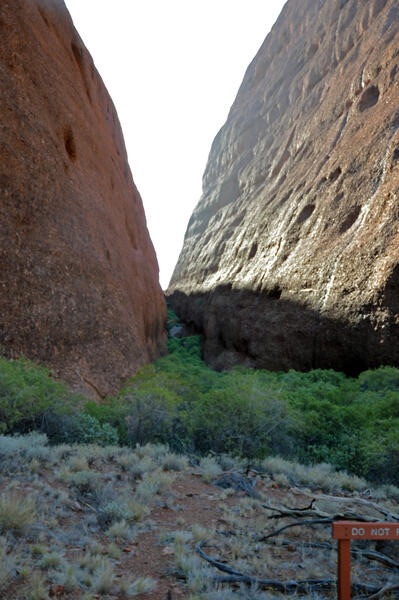
Kata Tjuṯa, named by white explorers as “the Olgas” lies relatively close to Uluru close to the Western Desert in the centre of Australia. It is hot, dry, and magic. I chose to start with the head of Bran to contrast with the 36 “heads” here, in a land about 32 times the size of Britain, where the culture of the indigenous people has survived for tens of thousands of years, despite their land and children being stolen. I had the privilege to walk the trail on one of two sites of Kata Tjuṯa where visitors are allowed, on a site sacred to the local tribe, the Aṉangu. Walpa Gorge (Valley of the Winds) is a challenging walk, about 30 minutes each way on broken rock and shifting scree, until about half way up you are stopped by a grove of spearwood. They have built a few short bridges and walkways over the less passable points. But there is great beauty and peace in this land where summer swelters. The photo shows the top half with the grove.

Note 23 March 2024: Another poet suggested a syllable counter on the web as a usefull tool, so I tried it out on this poem. It found 1 mistake where I was right and it was wrong (Annwyn) 2 where I was right but depending on wher you live and pronounced the word, it was was also right, and two wlines here I had missed a syllable. I've fixed these two, but haven't bothered with an "original poem" as the corrections were extremely trivial.
 Empty Chairs
You must be logged in to post a comment.